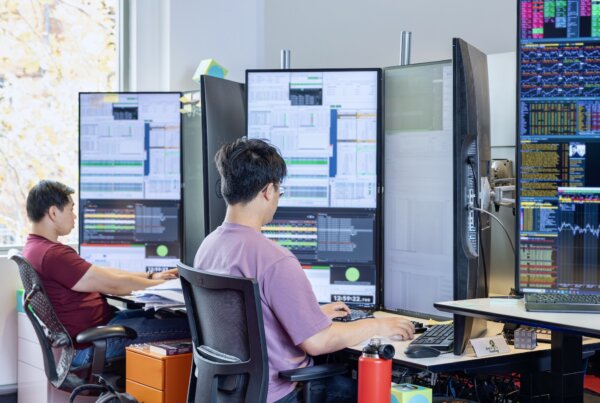

In this Q&A, Sam shares what sets top interns apart, the future of trading, and advice for aspiring talent.
What qualities set top-performing interns and grads apart at VivCourt?
Probability, statistics, mental maths, logic, and a solid grasp of Python all matter. They give you the base you need to start strong. Finance knowledge is helpful but not expected; most people pick it up quickly once they’re here.
What really sets top performers apart is their drive and approach to learning. The people who stand out are determined, ask questions, and communicate openly about what they’re thinking are the ones who show potential for growth. It’s not about having every answer, but about being able to break down messy, unfamiliar problems, form a reasonable view on value, and recognise where opportunities might lie. People who enjoy that kind of thinking and show an instinct for spotting opportunities tend to do well.
Financial markets and technology are rapidly evolving – how is the role of a trader changing and where is it headed?
The role of a trader is changing quickly, but at its core, it’s still about quantitative thinking, good judgment, and problem-solving. Traders now work much more closely with data, automation, and engineering, and that collaboration is only getting stronger. Instead of reacting manually to every market move, they’re designing systems, testing ideas with real data, and making decisions at scale. This direction naturally suits people who enjoy analytical thinking and feel comfortable working with big data, coding, or engineering concepts.
What’s your advice for receiving feedback effectively?
Feedback is one of the quickest ways to grow, but only if you lean into it rather than avoid it. Stay open and curious – try to understand the reasoning behind the feedback before jumping to defend your work. Ask questions if something isn’t clear, and reflect back what you’ve heard to make sure you’re aligned. It helps to remember that feedback isn’t a judgment of you; it’s information that helps you get better.

What are some interview tips and the best way to prepare for an interview?
- Communicate your thoughts. One common mistake we see in technical questions is candidates trying to come up with fully formed solutions immediately after being asked a question. Don’t be afraid to talk us through your thought process; it often helps you gain greater clarity in your answers.
- Show us your personality. Use the interview and your own questions as a platform to show us who you are and your specific interests.
- Try to interact positively with technical questions. We are a team of people who enjoy problem solving and we find that the people who engage positively with the questions often get more out of the scenarios and conversations.
A lot of candidates put their energy into technical prep but overlook how they communicate and engage. Being technically solid is important, but people who treat the interview like a conversation rather than a performance usually come across much stronger.
What resources would you recommend for people wanting to learn more about the industry?
I recommend the following books if you want to learn more about the industry, but we also teach everything you need to know.
- When Genius Failed – Roger Lowenstein
- Thinking Fast and Slow – Daniel Kahneman
- Option Volatility and Pricing – Sheldon Natenburg